
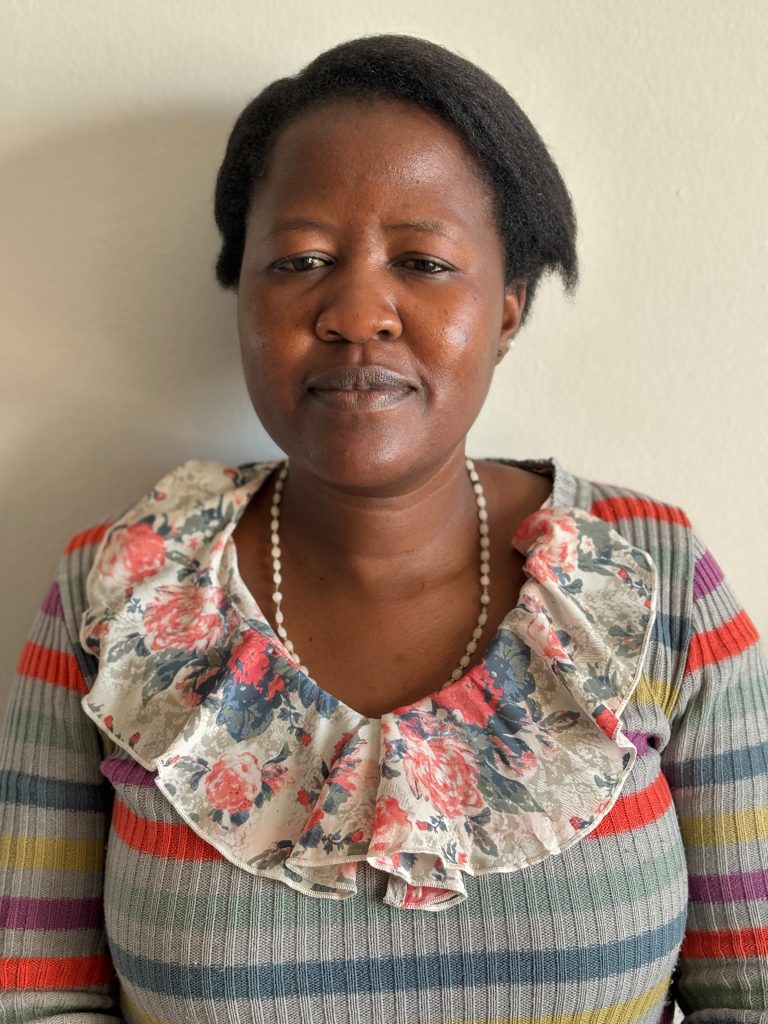
Khayelihle Benghu is a South African writer based in Johannesburg. She is the author of The Names We Carry, a collection of poems. Her work has appeared in Ake Review, Person of Interest, Metphrastics, Eyes on the Telescope, and Aloka, among other publications. Her writing explores memory, belonging, landscape, and the enduring connections between people and place.
Isaiah Adepoju: Hello Khayelihle. Thank you for accepting my invitation. I am pleased to be having this interview with you. I am thinking particularly about what may mark the onset of a poem. Points at which a poem really begins, its processes of change, and what may mark its readiness for submission. Could you walk me through how these phases are for you?
Khayelihle Bengu: Thank you for the invitation. It is a pleasure to be part of this conversation.
For me, a poem almost never begins with an idea. It begins with a feeling I cannot yet explain. Sometimes it is a single image, a bird sitting on a broken fence, rain collecting in an abandoned doorway, or a tree standing alone after a storm. Other times it is a sentence that arrives unexpectedly and refuses to leave me. I have learned not to force these moments. They come quietly, and my task is simply to pay attention.
The first draft is usually an act of listening rather than writing. I try not to control the poem too early because I believe every poem already knows something that I do not. My responsibility is to discover what that is. During revision, I begin asking questions like, What is the poem truly about? Which images are doing the emotional work, and which are merely decorative? I often remove more than I add. I want the language to become clear enough that the emotion can breathe without explanation.
A poem is ready for submission when it begins to surprise even me. There comes a moment when I no longer feel that I am speaking through the poem; instead, the poem seems to stand independently, saying something I could not have said in ordinary conversation. By then I have read it aloud many times, testing its rhythm, its silences, and whether every line has earned its place.
Even then, I never feel that a poem is completely finished. I think poems simply reach a point where they no longer belong only to the writer. Submission is an act of trust. It is the moment when I allow the poem to continue its journey in the imagination of another reader.
Isaiah Adepoju: In your poem, “The Museum of Lost Weather,” you depict Nature as existing only as spectacle, preserved like an exhibit, while technology has advanced enough to archive the weather but not to prevent ecological collapse. Do you think there might be a middle ground? Or are there ways technology may grow without crippling ecology or artistic practice?
Khayelihle Bengu: I do believe there is a middle ground, but I think it depends on the values that guide technology. Technology itself is not the enemy. It is a remarkable expression of human curiosity and imagination. The real question is whether we use it to deepen our relationship with the living world or to distance ourselves from it.
“The Museum of Lost Weather” imagines a future where people can preserve memories of rain but have forgotten how it feels to stand in it. That image came from a fear that we sometimes mistake documentation for experience. We photograph forests instead of walking through them, record birdsong instead of listening, and collect information about the natural world while becoming increasingly detached from it.
Yet I also know that technology has become one of the most powerful tools for protecting what remains. Satellites help us understand climate change. Scientists use new technologies to restore endangered species and monitor ecosystems. Writers and artists can reach readers across continents, creating conversations that would once have been impossible. In that sense, technology can become an ally rather than an adversary.
I hope we move toward a future where innovation is measured not only by efficiency or speed, but by care. A technology that helps rivers recover, protects forests, reduces waste, or amplifies voices that have historically been ignored is not opposed to ecology; it becomes part of its preservation.
The same is true for artistic practice. Artificial intelligence, digital archives, and new creative tools can support artists, but they cannot replace the deeply human experiences from which art grows. Wonder, grief, love, memory, and belonging cannot simply be manufactured. They are lived before they are written.
Ultimately, I believe the challenge is not choosing between nature and technology. It is remembering that every invention should help us remain fully human and fully connected to the world that makes our lives possible.
Isaiah: Ecology recurs as a theme in your works. It is how you view and understand not only yourself, but through it, you also approach the world and become one with it. As in your poem, “The Hole Like Mine”, where you wrote: “And I / I press my palm to her bark, / feel the echo of my own hollow.” There is a measure of political action inherent in this act of recognizing the agency of nature on one hand, and of oneself on the other hand, in a world opposed to these recognitions. Say, through the denigration of the sea or through human rights violations, whether of immigrants or of members of the LGBTQIA+ community. Does this political action end here for you, on the page?
Khayelihle: I don’t think it ends on the page. If it did, I would feel that the poem had only done half its work. For me, poetry is not a substitute for action, but it can be the beginning of it. Before we change the world, we first have to change the way we see it. A poem can slow us down long enough to notice what we have overlooked, a tree, a stranger, a coastline, or even our own woundedness. That act of attention is, in itself, deeply important.
When I write about nature, I am not separating human life from the living world. I see them as inseparable. If we can learn to value the life of a river or a forest, we may also become more attentive to the dignity of one another. The habit of care is not selective. It grows. It teaches us to resist every form of erasure, whether it is the destruction of an ecosystem or the denial of another person’s humanity.
As a poet, I know that my influence has limits. A poem cannot pass legislation or stop a war. But it can shape imagination, and imagination often precedes meaningful change. Many of the injustices we face begin when people stop seeing others as fully human, or stop seeing the natural world as something worthy of protection. Poetry quietly resists that way of thinking. It reminds us that every life, whether human or more-than-human, carries its own story and its own value.
Beyond the page, I hope to live according to the same values that I write about, to listen carefully, to remain open to other people’s experiences, and to treat both the natural world and those around me with compassion and respect. I don’t see poetry and daily life as separate. I hope each strengthens the other. Ultimately, I believe that every poem is an invitation. It invites us to imagine a more generous way of inhabiting the world. Whether that invitation becomes action depends on the reader, but I believe it is worth extending every time I write.
Isaiah: Could you speak to me about how you think of archival material, the process of archiving, that is, of documenting history against displacement? I am curious because in your poem, “The House That Wouldn’t Stay,” you note that it is through writing and the writing material that “the body remembers” its identity against displacement. According to your other poem, “What the Body Refuses to Forget,” you also note that it is through writing that the body remembers its own suffering and grief. Writing as archiving, writing as witnessing, and writing as resistance then seem the first and strongest defense of the displaced person. Certainly, the archive and the archival process is a result of bodies of knowledge armed not to see displacement or the displaced person. What does it mean for you to work through such archives?
Khayelihle: I think archives are often imagined as places where history is safely preserved, but they are also places of absence. Every archive tells us what has been remembered, but it also quietly reveals what has been forgotten, omitted, or never recorded at all. As a poet, I find myself drawn to those silences as much as to the documents themselves.
Writing allows me to enter those spaces where official history falls quiet. A poem cannot replace the historical record, but it can preserve something that facts alone often cannot: the emotional truth of an experience. It can remember the texture of grief, the sound of a mother’s voice, the feeling of standing in a place that no longer exists. These are forms of knowledge that deserve to be archived as well.
Displacement is not only the loss of a home or a country. It can also be the feeling of becoming unfamiliar to yourself. That is why the body appears so often in my poems. Even when buildings disappear or landscapes change, the body continues to carry memory. It remembers joy, fear, longing, love, and loss in ways that language sometimes struggles to express. Writing becomes a conversation with those memories. It allows them to exist outside the body without asking them to disappear.
I am also interested in expanding our understanding of what deserves to be archived. Not only governments and institutions create history. Rivers do. Trees do. Families do. Ordinary people do. A house remembers who laughed within its walls. A garden remembers who planted it. A coastline remembers every tide that shaped it. My poetry often imagines the natural world as an archive because I believe memory exists beyond human records.
Perhaps that is why I continue writing. Every poem becomes a small act of preservation. Not to keep the past frozen, but to ensure that what has been loved, suffered, or endured is not erased by silence. For me, writing is both witnessing and hope. It says to those who have been displaced, forgotten, or overlooked, you were here, your story matters, and someone is still listening.
Isaiah: You are a poet and a photographer. In film class, I was taught that the art of composition is a training primarily on how to see. Since how we see is what we see. The power of the picture seems to me then to lie in the framing of its subject. Speaking of displacement, whether of stateless persons seeking asylum from war, the displacement one may suffer from one’s own body, trees displaced from soil, and migrants seeking settlement; can there be similarities in how poetry, like photography to the photographer or observer, inflects the seeing of the displaced?
Khayelihle: I think poetry and photography begin with the same act: paying attention. Before either art form asks us to create, it asks us to look. Not to glance, but to remain with something long enough for it to reveal itself. I think that kind of attention is becoming increasingly rare, and perhaps that is why both poetry and photography still matter so deeply.
Photography teaches me that framing is never neutral. Every photograph includes something and leaves something outside its edges. Poetry does the same. Every poem decides where to rest its gaze, what silence to leave intact, and what voice to bring into the light. Those choices carry ethical as well as artistic weight.
When I write about displacement, I try to resist reducing people to symbols of suffering. Displacement is real, but so are dignity, resilience, tenderness, humour, memory, and hope. I want my poems to make space for the fullness of a life rather than allowing a single tragedy to define it. In that sense, poetry reframes what we think we know. It asks us to look again, more slowly and more compassionately. Photography has also taught me that light changes everything. The same landscape can appear harsh at midday and gentle at dusk. I think the same is true of people. Often what changes is not the person before us, but the way we choose to see them. Poetry invites that second look. It asks us to move beyond first impressions and inherited assumptions.
Whether I am holding a camera or writing a poem, I hope I am practising the same discipline: to witness without possessing, to observe without reducing, and to honour what stands before me without speaking over it. That is especially important when writing about people whose stories have too often been told by others. Ultimately, I believe both poetry and photography are acts of hospitality. They make room for another presence. They remind us that every person, every landscape, every tree, and every memory deserves to be seen with care rather than consumed with haste.
If my work accomplishes anything, I hope it encourages readers not simply to look at the world differently, but to love it more attentively. I believe that how we see the world shapes how we choose to live within it, and perhaps that is where both art and compassion begin.
The habit of care is not selective. It grows. It teaches us to resist every form of erasure, whether it is the destruction of an ecosystem or the denial of another person’s humanity.
– Khayelihle Benghu
Song for a Dry Well
The well has forgotten water.
Its stones bake beneath relentless sun.
Rope hangs useless and frayed.
Buckets gather nearby dust.
Still, elders visit each morning.
They sit beneath the acacia tree.
Stories rise where water once did.
They speak of overflowing seasons.
Of cattle drinking at dawn.
Of children splashing carelessly.
Young listeners struggle to imagine abundance.
Drought has shaped their memories.
Yet hope survives stubbornly.
It survives in seeds carefully saved.
It survives in prayers before sleep.
One afternoon clouds gather unexpectedly.
Thunder rolls across distant hills.
Everyone turns toward the sky.
The first drop strikes ancient stone.
Then another, and another.
The well remembers water.
Evening Between Seasons
Summer is leaving.
Winter waits at the edge of the garden.
We sit between them.
A bowl of oranges catches the fading light.
The conversation wanders.
First to weather.
Then to childhood.
Then to the future.
The evening knows where to go.
Birdsong fades.
Crickets begin.
The sky changes from gold to indigo.
Still we remain.
Held by that brief country
between arrival and departure.
Between memory and hope.
Between one season
and the next.

